
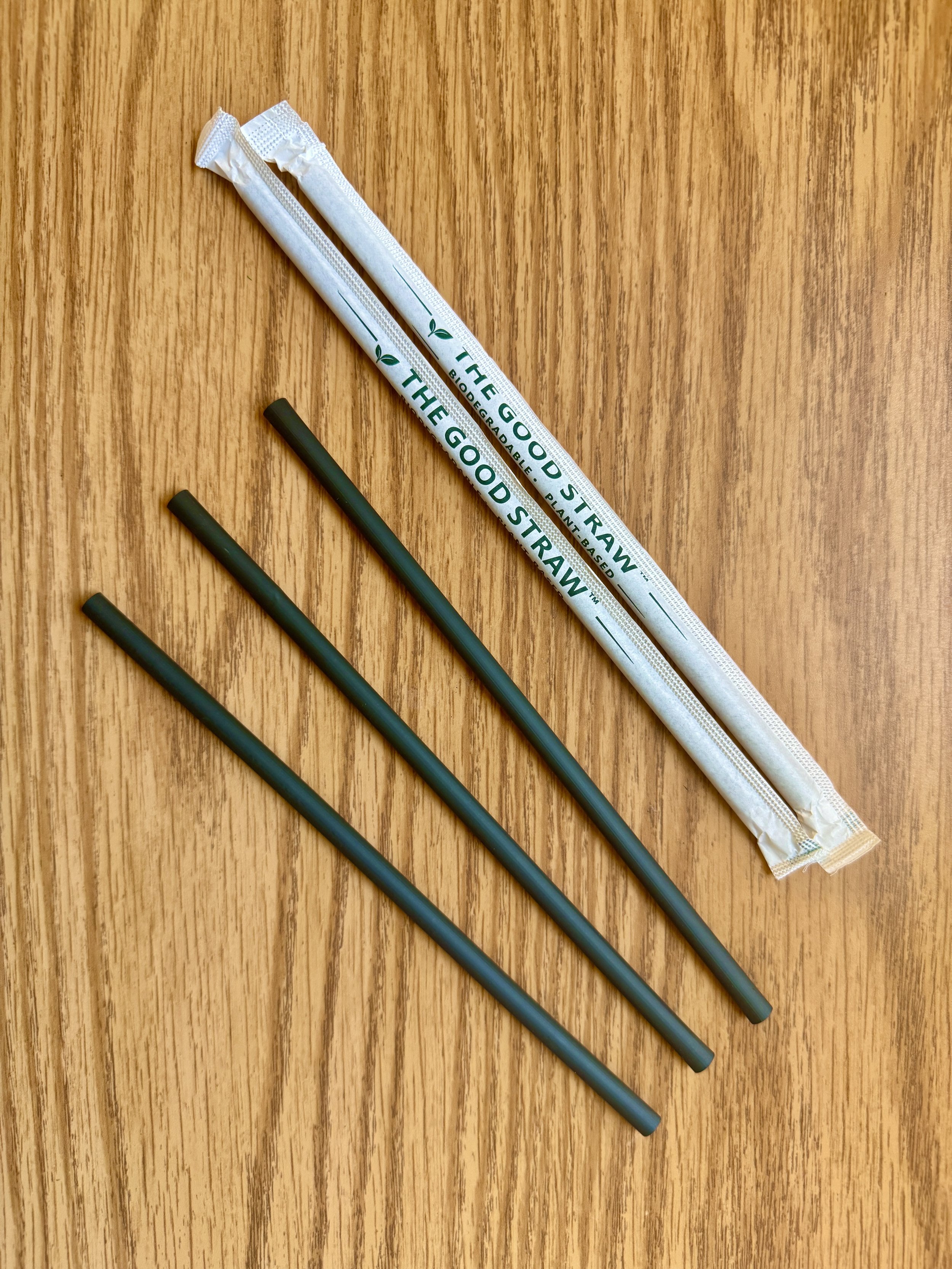
The Good Straw
Our brand stands for practical sustainability—creating products that are functional, scalable, and environmentally responsible while supporting businesses and consumers who want to make better choices for the planet.
What Is Mineralization?
Mineralization is when a material is fully converted into natural byproducts:
Carbon dioxide (CO₂)
Water
Biomass (new microbial life)
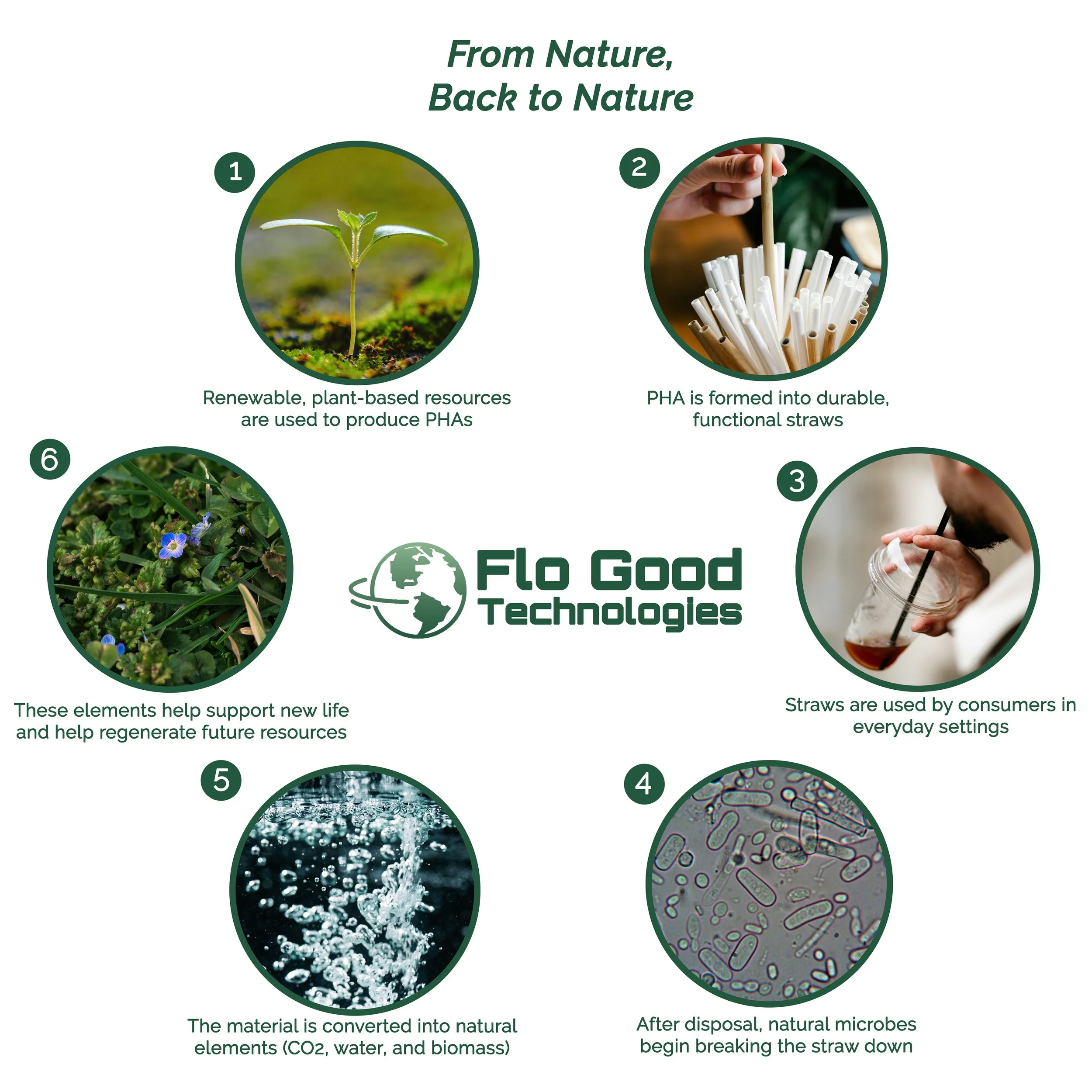
This means the material doesn’t just break into smaller pieces; it is completely reintegrated into the natural ecosystem. Not only are our straws dissolving into the environment, but they are also being converted into natural byproducts that plants and other natural life can use to their advantage.
How Our Material Returns to Nature
Our straws are made from polyhydroxyalkanoates (PHAs) — a family of biodegradable materials naturally produced by microorganisms using renewable plant-based resources such as plant oils or sugars.
After use, PHAs are broken down by naturally occurring microbes found in soil, freshwater, and marine environments, a process known as biodegradation.
Know The Science behind The Good Straw
The problem we are solving
Single-use plastic straws create environmental pollution and many alternatives are either too expensive, dissolve quickly, or lack durability.
How Biodegradation Is Measured
Independent scientific organizations have developed standardized methods to measure how materials biodegrade in real-world environments.
In laboratory settings, scientists use respirometric (gas evolution) testing to track biodegradation. These tests measure the amount of carbon dioxide released as microorganisms consume the material.
This process confirms mineralization, the final stage of biodegradation.
Designed for Sustainable Environments
PHAs can biodegrade in a wide range of conditions, including:
Soil
Compost
Freshwater
Marine environments
Because biodegradation is a biological process, the speed depends on environmental factors such as temperature, oxygen, and the presence of microorganisms. Keeping this in mind, we guarantee our straws will take only months to completely dissolve and convert into natural byproducts.